

Quick Answer
To germinate cannabis seeds, place them in a moist environment — such as a damp paper towel, a glass of water, or a starter plug — at temperatures between 70–85°F (21–29°C). Most seeds sprout a visible taproot within 24–120 hours. Once the taproot is ¼ to ½ inch long, carefully transfer the seed to your growing medium.
Key Takeaways:
- Warmth and moisture are the two most critical factors for successful germination
- Most healthy cannabis seeds germinate within 1–5 days under ideal conditions
- Handle seeds and taproots as little as possible to avoid damage
- Old or improperly stored seeds may have lower germination rates
- Plant the taproot facing downward when transferring to soil or a growing medium
Introduction
Germinating cannabis seeds is the first — and arguably most important — step in any successful grow. Get it right, and you'll have strong, vigorous seedlings ready to thrive. Get it wrong, and you risk stunted plants or total failure before you've even started. The good news is that germination is straightforward once you understand what seeds need: warmth, moisture, and darkness. Whether you're a first-time grower or refining your technique, this guide walks you through five reliable methods and the conditions that give every seed the best possible start[1].
What Do Cannabis Seeds Need to Germinate?
Before diving into methods, it helps to understand the biology. A cannabis seed contains a dormant embryo that activates when it detects the right environmental conditions[2]. Three factors trigger germination:
- Moisture — Water softens the outer shell and signals the embryo to wake up
- Warmth — Temperatures between 70–85°F encourage enzyme activity and root development[3]
- Darkness — Seeds germinate best when shielded from direct light
Avoid overwatering, which can suffocate the seed, and temperatures below 65°F or above 90°F, which slow or halt the process[2]. Seed quality matters too — fresh seeds from reputable sources consistently outperform old or poorly stored ones[1].
How to Germinate Cannabis Seeds Step by Step
Here are five proven methods, ranked from most beginner-friendly to most advanced.
Method 1: Paper Towel Method (Most Popular)
- Dampen two paper towels — moist, not dripping
- Place seeds on one towel, fold the other over the top
- Set the towel on a plate and cover with another plate to trap humidity
- Store in a warm, dark spot (a cabinet above a refrigerator works well)
- Check every 12–24 hours, remoistening if needed
- Transfer to soil once the taproot reaches ¼–½ inch[4]
Method 2: Glass of Water
Drop seeds into a glass of room-temperature, pH-neutral water (around pH 6.0). Seeds typically sink and crack open within 24–48 hours[3]. Don't soak for more than 32 hours — seeds need oxygen and can drown.
Method 3: Direct Soil Planting
Plant seeds ½ inch deep in moist, lightly fertilized seedling soil. This method minimizes transplant shock since you skip the transfer step entirely. Keep the growing medium consistently moist and maintain temperatures in the ideal range[2].
Method 4: Starter Plugs or Peat Pellets
Pre-made starter plugs offer a ready-made germination environment with ideal moisture retention and aeration. Simply insert the seed, place the plug in a humidity dome, and wait. This method is especially reliable for beginners[5].
Method 5: Stone Wool / Rockwool Cubes
Popular for hydroponic setups, stone wool cubes hold moisture evenly and support excellent root development. Pre-soak cubes in pH 5.5 water before inserting seeds[5]. Note: Rockwool is less beginner-friendly due to the need for precise pH management.
When Is the Best Time to Start Germinating?
If you're growing outdoors, timing your germination to local climate matters significantly. In most regions of North America, starting seeds indoors 4–6 weeks before the last frost date — typically late March through May — gives seedlings enough time to establish before outdoor transplant[6].
For indoor growers, germination can happen year-round since you control the environment entirely. Start seeds 1–2 weeks before you plan to begin your vegetative lighting schedule to keep your grow timeline on track[4].
Regardless of season, always germinate seeds in a controlled indoor space where temperature and humidity are stable. Drafts, cold windowsills, and fluctuating temps are common causes of poor germination rates[3].
Your Next Steps
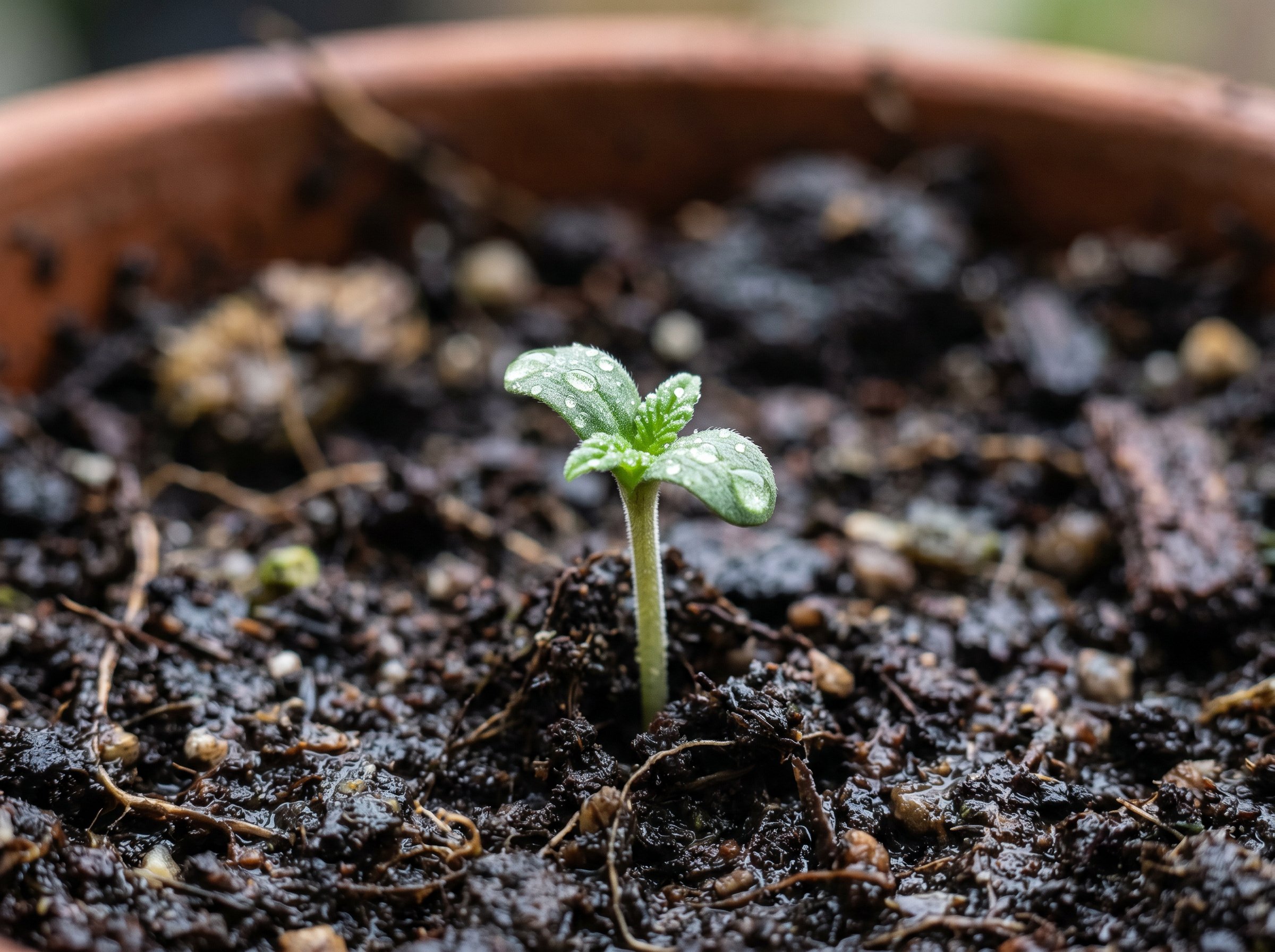
Once your taproot appears, act quickly — a taproot left too long in a germination setup can dry out or become fragile. Use tweezers or a toothpick (never your fingers if possible) to gently move the seed taproot-down into your chosen growing medium, about ½ inch deep. Cover lightly, mist the surface, and maintain warmth and high humidity (70–80%) until the first set of leaves — called cotyledons — breaks the surface[1][4].
From here, you're officially into the seedling stage. Keep lighting gentle (18 hours on, 6 off for indoor grows), water sparingly, and watch your plants take off.
Sources
- University of Vermont Extension - Cannabis cultivation and seedling establishment research
2. Colorado State University Extension - Seed germination biology and environmental requirements
3. Oregon State University Extension - Cannabis growing conditions and temperature guidelines
4. University of California Cooperative Extension - Cannabis seedling production and handling best practices
5. Journal of Industrial Hemp - Comparative germination substrate performance in Cannabis sativa
6. USDA Plant Hardiness Zone Map - Frost date and planting season reference by region